Introducing Palliative Care Navigation in South Australia
An article written by Amber Bisset, Mariana Ricci and Kate Swetenham, SA Health
Palliative care navigation helps people understand and access support when the system feels complex or unfamiliar. In South Australia, palliative care and bereavement navigation is delivered by Palliative Care Connect (PCC), where PCC Navigators provide information, service linkages and support people to make choices aligned with their culture and preferences. PCC is also available to health, aged care, disability and community service professionals seeking advice on next steps or information for the people they support.
PCC is a free statewide phone service staffed by nurses and social workers with palliative care expertise, developed to support the transition from cure to care at end of life and to walk alongside patients and carers as their needs change. PCC Navigators help people understand their options and connect with local supports, including grief and bereavement.
Anyone can contact a PCC Navigator directly by phone (1800 725 548) - no referral required - or request a call back through the contact form on the PCC website.
What is palliative care?
Palliative care helps people of all ages with a life-limiting illness live their life fully and comfortably. A life-limiting illness is one likely to cause death in the foreseeable future, including cancer, neurological disease, dementia, and advanced kidney, heart, liver or lung disease. Palliative care addresses physical symptoms along with emotional, social, cultural and spiritual needs and can be provided at home, in hospital, in aged care facilities and in community settings.
Delivering palliative care is a team effort, and includes GPs, medical specialists, allied health and where needed specialist palliative care services. Families and friends also have a role to play and can also receive practical and emotional support.
What is palliative care navigation?
Navigation offers brief, episodic support and works alongside existing care teams. In moments when people feel stuck or unsure, PCC Navigators listen, help interpret what’s happening, outline options and connect people with services so they can make choices with confidence. It can help soon after a diagnosis, during changes in treatment goals, or when symptoms or caring responsibilities increase.
Navigation also helps families and carers feel confident they are on the right track, reduces uncertainty during stressful moments, and provides guidance about emotional supports, both pre- and post-death.
PCC offers a ‘no wrong door’ approach, guiding people to supports across health, aged care, NDIS (where applicable) and other community services at any stage.
Palliative Care Connect navigation in practice
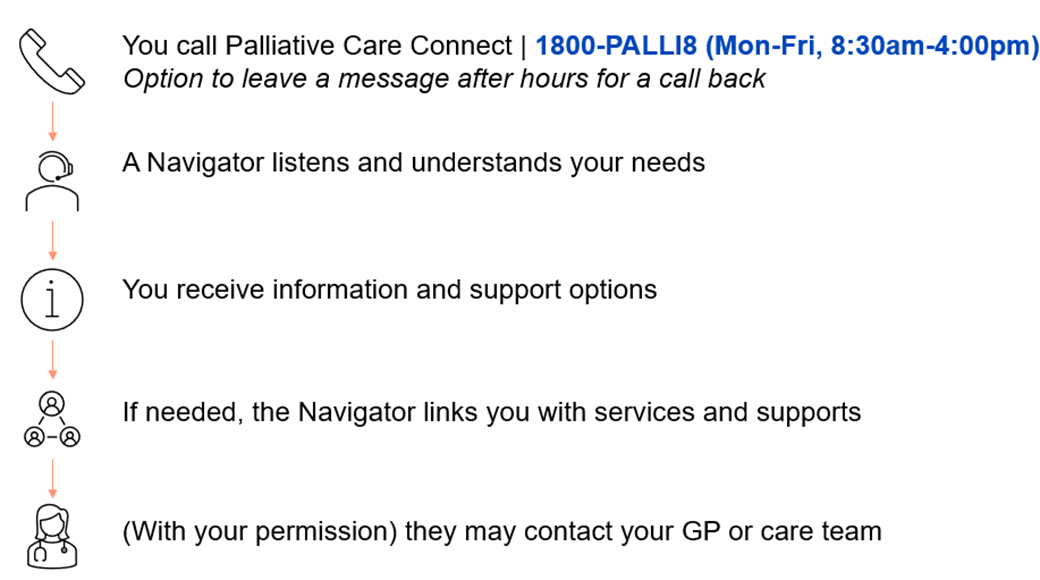
PCC also brings together a broader umbrella of services, including:
- bereavement navigation,
- Aboriginal palliative care navigation,
- volunteer support and connections through Palliative Care Volunteering SA, and
- coordination of practical assistance through the Healthy End of Life Program (HELP) so friends and neighbours can assist with routine tasks that can make a difference to a carer or patient’s day.
The PCC website is the 24-hours navigator, offering pathways with information that can help people understand what they are going through and what help is available as a patient, carer, relative of someone with a life-limiting illness, or someone who suffered a loss. A statewide service directory and a self-assessment tool help people identify their needs and find relevant palliative care, bereavement and community services.
Where to start: Call 1800 725 548 (PALLI8) or visit www.palliativecareconnect.com.au.
Authors

Amber Bisset
Project Officer, Health Services Programs
Clinical System Support and Improvement, SA Health

Mariana Ricci
Manager – End of Life Care, Health Services Programs
Clinical System Support and Improvement, SA Health

Kate Swetenham
Director of Nursing - End of Life Care, Health Services Programs
Clinical System Support and Improvement, SA Health