


Read the latest news from our project
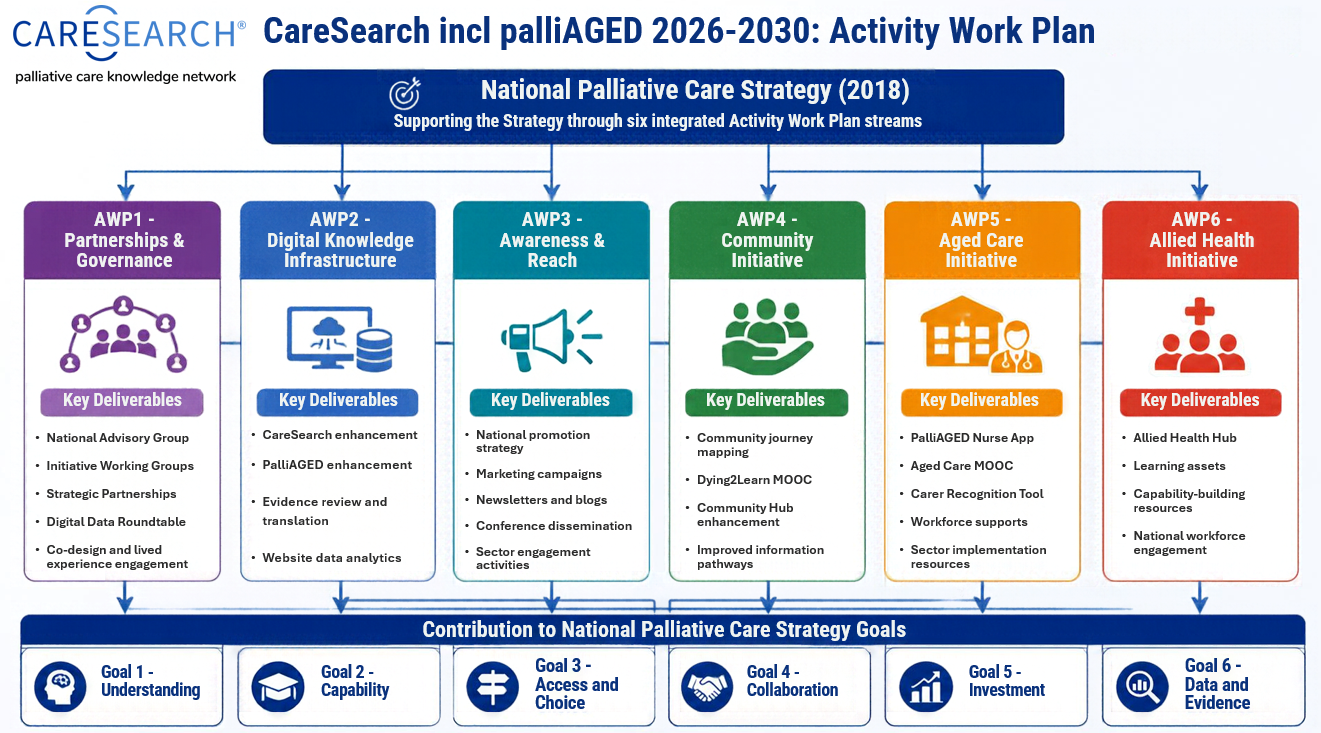
CareSearch incl palliAGED Stakeholder Reference Group Inaugural Meeting for 2026-2030
-
Improving access to care, particularly for people living in rural and remote communities.
-
Strengthening coordination across services, including palliative care, aged care, primary care and other end-of-life supports.
-
Recognising and supporting carers, whose contribution remains essential yet often under-recognised.
-
Building the visibility and capability of primary care health professionals including allied health and nursing within palliative care.
-
Improving data, evidence and outcomes measurement to better understand needs, access and quality of care.
-
Enhancing death literacy and community understanding of palliative care and end-of-life care.
-
Ensuring trusted information is accessible, while recognising that digital approaches must be complemented by human support and multiple information pathways.
-
A community-focused initiative delivered in partnership with the Public Health in Palliative Care Unit (PHPCU) at La Trobe University, including a Dying2Learn MOOC, a community journey-mapping workshop, enhancements to the CareSearch Community Hub, and activities to strengthen awareness and engagement among patients, carers and families.
-
Aged care engagement activities, which will deliver an aged care focused MOOC, an uplift of the palliAGEDnurse app, and a carer recognition tool, in partnership with Ageing Australia and Australian Primary Health Care Nurses Association (APNA)
-
An allied health initiative delivering scaleable, evidence informed learning assets to enhance clinical decision making, in partnership with Allied Health Professions Australia (AHPA)
-
And a digital round table to examine the role of online palliative care information in an AI and digitally enabled environment.
Posted: 04/11/2026
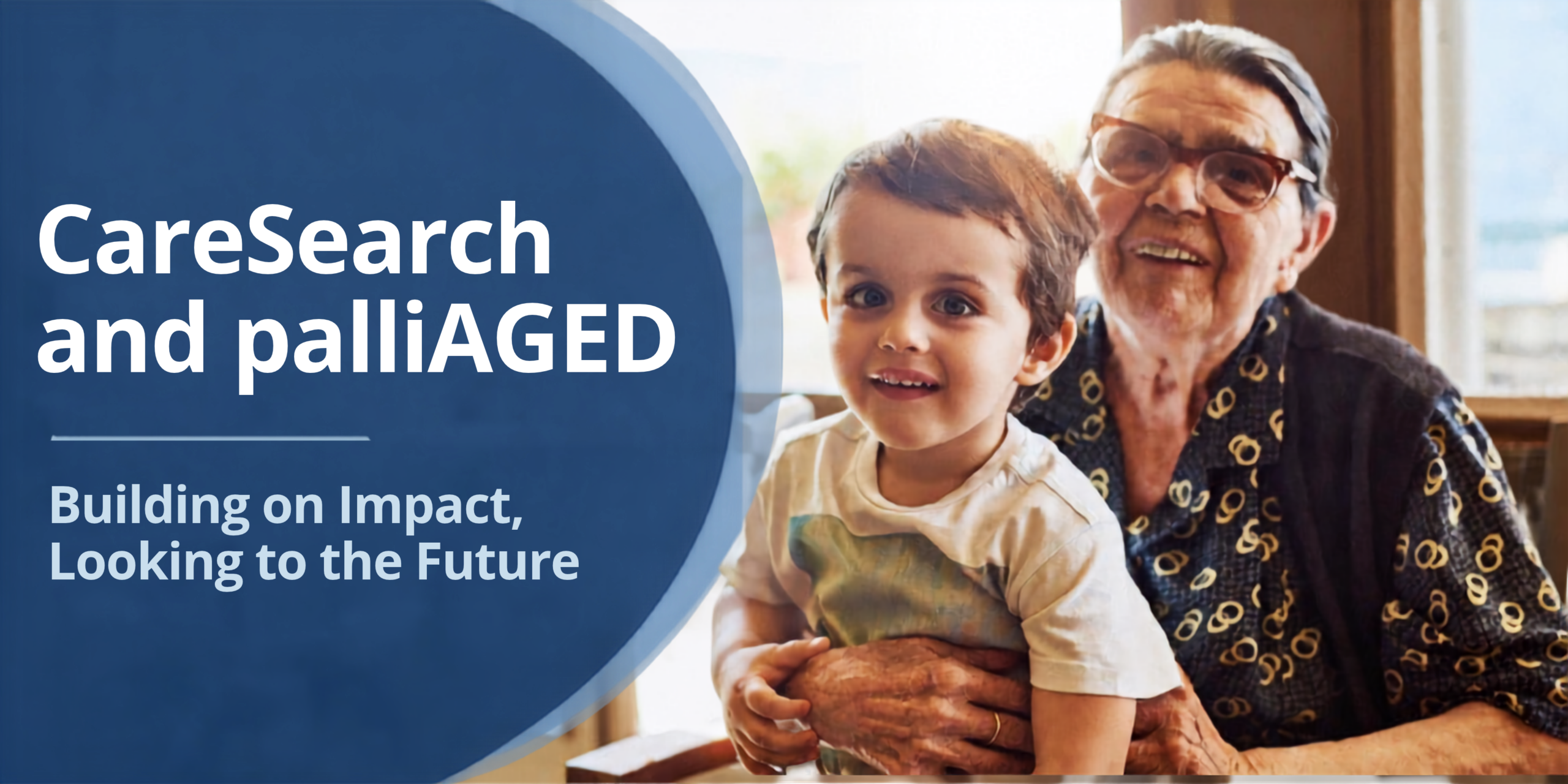
CareSearch and palliAGED: Building on Impact, Looking to the Future
Since launching in 2008, CareSearch has evolved alongside the changing needs of the palliative care sector. This digital knowledge network enabled through the CareSearch and palliAGED websites supports over 150,000 visits from consumers, carers, families, aged care providers, health professionals, educators, researchers and policy makers across Australia each month.
While we have been waiting for the grant outcomes to be announced, we have used the time to review what we have achieved, build a stronger digital platform, and strengthen our partnerships. We are now delighted to share that we have received a further four years funding.
Renewed funding provides an opportunity to build on the impact achieved to date and meet emerging opportunities and challenges across health and aged care. We are particularly excited to begin this next phase alongside our activity partners:
- Ageing Australia working with us on a carer recognition tool for Support at Home
- La Trobe Public Health Palliative Care Unit working with us on understanding patient, carer, community journeys and the return of the Dying2Learn MOOC
- Allied Health Professions Australia (AHPA) helping us develop allied health learning assets
- Australian Primary Health Care Nurses Association (APNA) helping us redesign the palliAGEDnurse app with Ageing Australia
The success of CareSearch and palliAGED reflects the contributions of many people and we encourage you all to stay connected by:
- subscribing to our newsletters
- Connecting on LinkedIn
- sharing your ideas and feedback
- contacting us about partnership opportunities.
Together, we can continue building trusted resources that support high-quality palliative care for Australians now and into the future. We look forward to working with you as we build the next CareSearch including palliAGED chapter.
Posted: 16/09/2026
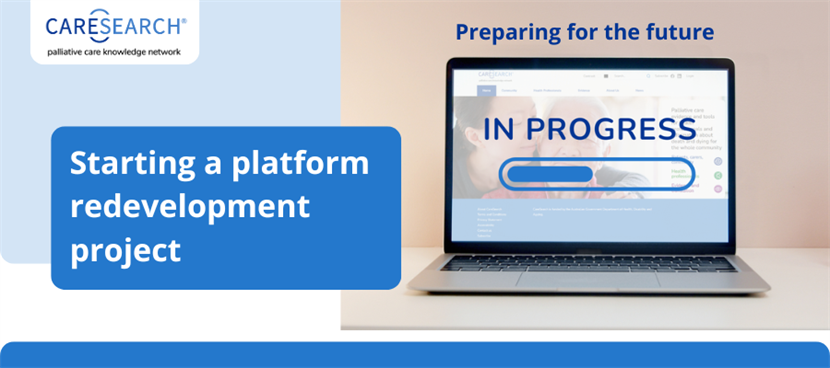
Delivering a digital upgrade
Earlier this year, we shared that the CareSearch Project Team had started a project to reconceive and deliver an updated digital platform to house the CareSearch and palliAGED websites. In a fast moving digital ecosystem, our system, applications and platforms needed updating.
Since then, we have reviewed the information architecture of the CareSearch and the palliAGED sites identifying content that would no longer be necessary or was better stored as legacy materials rather than active knowledge sources. We also looked at how we could more efficiently manage the vast amount of information embedded within our websites. There was also a multitude of university processes to be considered in this redevelopment. The project was ably supported by ongoing involvement and oversight from the Information and Digital Services (IDS) team within Flinders University and by our external partners.
Following the planning stage, we created the framework for the revised information architecture in a staging site before bringing across the website content mapped for transfer. The recreated pages and resources were then reviewed and tested for functionality before release into the live site. The upgrade exercise also provided us with the chance to review the range of applications we had been using and to consider how AI can be ethically and responsibly used in our business processes and to enhance user experience of the site.
Central to our work has been examining security and effective functionalities, applications that make it easier for visitors to find and use evidence that helps in decision making and care delivery, and data systems that can help us better understand how people seek, find and engage with knowledge.
The CareSearch website was moved to its new home at the start of July and palliAGED was re-platformed as the start of August. The new platform arrangements have become operational and provide us with a strong base for engaging with the sector to deliver our 2026-2030 activity workplan.
Posted: 16/09/2026

Reflections on The EAPC conference (14-16 May 2026) Prague, Czech Republic from our Director, Prof Jennifer Tieman
Attending EAPC 2026 in Prague provided a valuable opportunity to share and learn from international approaches to palliative and end-of-life care at a time of significant aged care reform in Australia. Across presentations, posters and discussions, there was strong recognition of the growing challenges associated with population ageing, frailty and multimorbidity, and the need for systems and workforce responses that better support people approaching the end of life. Key themes emerging from the conference included the importance of accessible evidence-based resources, the role of primary care in palliative care delivery, and growing interest in how artificial intelligence may support future care models.
A particular highlight was the strong focus on practical tools and education resources that can support clinicians, educators and services to respond to changing community needs with confidence, compassion and evidence-informed care. I was therefore delighted to be able to share CareSearch and palliAGED resources, and our evaluation findings on CareSearch clinical evidence summaries, which are seen as valued by the sector, and an essential catalyst to informing current palliative care practice.
Posted: 17/06/2026

Supporting National Palliative Care Week
This month we are supporting National Palliative Care Week with its focus on ‘Getting to the heart of it: Big Questions. Real Answers’. Evidence shows that when palliative care conversations start earlier, care is more closely aligned with what matters most to people, and distress for loved ones is reduced. Experience tells us that meaningful conversations don’t always begin with direct questions. Sometimes it’s a gentle prompt, or a single thoughtful question that opens the door.
To help raise awareness, our team have been supporting local events in collaboration with Flinders University, Research Centre for Palliative Care, Death and Dying (RePaDD), our partner projects and the Southern Adelaide Palliative Service (SAPS). We also asked Flinders University colleagues some big questions about what comes to mind when they heard ‘palliative care’ and compared this to our student survey last year. It’s great to see that staff and students are aligned in their understanding of palliative care.
 |
 |
Posted: 18/05/2026

National Palliative Care Week blog series
This five-part National Palliative Care Week blog series by Amber Bisset, Mariana Ricci and Kate Swetenham, highlights how the Palliative Care Connect (PCC) service supports people, families, carers, and professionals across South Australia.
Reflecting this year’s theme, the series explores some of the important questions people may face when navigating palliative care, grief, bereavement, and access to support, while highlighting the value of compassionate guidance, clear information, and connection when it matters most.
Posted: 17/05/2026