


Key messages
- Prognostication in palliative care involves predicting the disease course and estimating time remaining for patients nearing end of life. Prognostication tools such as the Surprise Question, Supportive and Palliative Care Indicators Tool, Palliative Performance Scale and Palliative Prognostic Index are critical for identifying patients needing palliative care.
- Palliative care needs assessment identifies the physical, emotional, social, and spiritual needs of patients with life-limiting illnesses.
- Deprescribing involves reducing or stopping unnecessary medications to enhance quality of life as patients near end of life.
- Telemedicine can bridge gaps in palliative care access in rural areas, though its implementation must consider technological literacy and access.
- Supporting families and carers involves addressing their emotional, social and practical needs, and providing resources like respite care and counselling.
Definition and prevalence
Prognostication in palliative care refers to the process of predicting the likely course and outcome of a disease, particularly in estimating the time remaining for patients nearing the end of life. [1,2] This includes the use of various tools and clinical judgements to guide treatment decisions and care planning. [2,3] Palliative care needs assessment focuses on identifying the physical, emotional, social and spiritual needs of patients with life-limiting illnesses to provide holistic, patient-centred care. [4,5]
Assessment
Prognostication tools in palliative care are important for identifying patients who may benefit from palliative interventions. [1,2] The Surprise Question (SQ), which asks clinicians if they would be surprised if a patient died within a specified period of time (usually 6-12 months), is a widely used tool that helps identify patients who need further assessment and palliative care. [1,6] Despite its simplicity, the accuracy of the SQ can vary between clinicians and especially among patients with complex conditions like frailty. [6,7]
The Supportive and Palliative Care Indicators Tool (SPICT) aids healthcare professionals in identifying patients with deteriorating health due to advanced conditions and unmet supportive care needs, promoting timely and comprehensive palliative care planning. [2,8] Similarly, the Palliative Performance Scale (PPS) measures a patient’s functional status, providing a score that helps in prognostication and planning appropriate interventions. [9,10]
Another important tool, the Palliative Prognostic Index (PPI), uses clinical variables such as performance status, oral intake and symptoms like dyspnoea and delirium to predict survival, aiding in informed decision-making about the timing and intensity of palliative care. [2,11] Palliative Care Needs Rounds, involving multidisciplinary discussions about patients with complex conditions, ensure comprehensive care by addressing all aspects of a patient’s needs. [12,13]
Question Prompt Lists (QPLs) are designed to encourage patients to ask questions about their prognosis, treatment options and care preferences. [14,15] QPLs can improve communication between patients and healthcare providers, ensuring that patients’ concerns and preferences are addressed during consultations. [14,15] They are particularly useful in facilitating discussions about palliative care and end-of-life planning, helping patients to make informed decisions about their care. [14,15]
Comparatively, each tool has its strengths and limitations. The SQ is quick and easy to use but may lack precision in certain populations. [1,6] SPICT and PPS provide more detailed assessments but require more time and training to implement effectively. [8,9] The PPI is particularly useful for predicting survival but may not capture all dimensions of a patient’s condition. [2,11] Needs Rounds ensure holistic care but depend on the availability of a multidisciplinary team. [12,13] QPLs enhance patient engagement and ensure their preferences are central to care planning, but they rely on patients’ willingness to participate and ask questions. [14,15]
It is important to note, other assessment tools exist and can be selected based on the clinical setting and resources available.
Treatment
Palliative approaches to care should be present from the initial diagnosis of a life limiting illness. However, the focus should shift to palliative care when the goals of care need to change from prolonging life to enhancing quality of life. [16,17] This transition often includes deprescribing unnecessary medications that may no longer provide benefit and could cause harm as a patient nears the end of life. [16,17] It involves a careful evaluation of the patient’s current medications, considering factors such as life expectancy, goals of care and potential side effects. [16,17] Deprescribing can be particularly important in managing symptoms and improving the quality of life for patients with multiple chronic conditions. [17,18] For example, patients with advanced cancer or end-stage organ failure often take multiple medications, some of which may no longer be necessary or may contribute to adverse effects. [1,2] By carefully evaluating and discontinuing such medications, healthcare providers can help reduce unnecessary drug interactions and side effects, enhancing patient comfort and well-being. [1,17]
Anticipatory prescribing refers to the practice of pre-emptively providing injectable medications to manage symptoms such as pain, nausea, dyspnoea and anxiety in patients approaching the end of life. [19] This approach ensures that medications are readily available for timely administration, thereby preventing symptom crises and reducing emergency hospital admissions. [19] When recognising the last months of life, anticipatory prescribing allows palliative care teams to develop comprehensive and individualised care plans that anticipate potential symptom exacerbations. [19] This proactive method enhances patient comfort and supports family carers by equipping them with the necessary tools and confidence to manage distressing symptoms at home. [19] Effective implementation of anticipatory prescribing requires standardised training from healthcare professionals, and efficient management of medication supply and storage, which collectively improve the quality of end-of-life care. [19]
Incorporating discussions about prognosis and advance care planning are essential for high quality palliative care. [20,21] Clear communication about the limitations of curative treatments and the benefits of palliative care helps patients and families make informed decisions. [20,22] For example, studies have shown that timely discussions about goals of care in advanced cancer can improve patient satisfaction and align treatment with patient preferences. [2,22]
The ethical considerations in transitioning from curative to palliative care are also significant. Providers must navigate the balance between offering hope and being realistic about outcomes, ensuring that patients and families understand the shift in focus without feeling abandoned. [23,24] The literature emphasises the importance of a compassionate approach, where the patient’s values and preferences are central to care decisions. [1,24]
Equity and access
Culturally and linguistically diverse (CALD) populations often face significant barriers in recognising the last months of life and accessing appropriate palliative care. [25,26] Cultural differences, language barriers and distrust of the healthcare system are major obstacles. [25,26] Effective communication and culturally sensitive care are essential to addressing these disparities and ensuring equitable access to palliative care services. [5,27]
In rural areas, geographic isolation and limited healthcare resources further exacerbate these challenges. [28,29] Telemedicine has emerged as a valuable tool to bridge the gap, providing remote consultations and continuous support to patients in rural settings, thus improving their access to palliative care. [28,29] However, the implementation of telemedicine must consider the technological literacy and access of rural populations to ensure its effectiveness. [26,28]
For incarcerated individuals, the prison environment poses unique barriers to end-of-life care. [3,30] Ensuring that these individuals receive compassionate and appropriate palliative care requires tailored interventions that address the constraints of the prison setting and the specific needs of the population. [3,30]
Socioeconomic status is another critical factor influencing access to palliative care. [5,26] Low socioeconomic status is associated with reduced access to healthcare services, limited availability of necessary resources and increased burden on families and carers. [5,26] Addressing these disparities requires policies and interventions that provide financial support, education and resources to underserved populations. [5,25]
Care context
Recognising the last months of life in aged care settings involves addressing the unique needs of older adults, including managing chronic illnesses, frailty and cognitive impairments. [7,14,24] Older adults often have multiple comorbidities, which complicates prognostication and requires a nuanced approach. [14,24] Effective communication, comprehensive care planning and multidisciplinary approaches are essential in providing palliative care in care homes. [7,14,24] Clinical indicators such as sudden weight loss, frequent hospitalisations and declining functional status can help healthcare providers identify residents in their last months of life, enabling timely initiation of palliative care interventions. [24,31]
Paediatric palliative care addresses the unique needs of children with life-limiting conditions and their families through specialised approaches. [12,32] Unlike adults, children often face longer illness trajectories due to conditions like congenital disorders and childhood cancers. [12] This care integrates symptom management, psychosocial support and family-centred care, ensuring comprehensive support throughout the illness. [12] Collaboration with paediatric specialists and a multidisciplinary team is essential to address pain, emotional and developmental needs when recognising the last months of life. [12] Early integration of palliative care improves quality of life, aids in complex medical decisions and provides emotional coping mechanisms. [12] Tailored communication, involving honest discussions about prognosis and care goals, builds trust and supports shared decision-making. [12] Educational resources and counselling empower families to make informed decisions that align with their values. [32] Recognising the impact on the entire family, paediatric palliative care includes family support, counselling and respite care. [32]
Implications for families and carers
Families and carers play a crucial role in providing support and care for patients in their last months of life. [14,32] Their involvement is essential in care planning, decision-making, and managing day-to-day care needs. [14,32] Effective communication and providing adequate information and resources are vital in helping families and carers understand the patient’s condition, treatment options, and palliative care goals. [18,32]
Supporting families and carers involves addressing their emotional, social, and practical needs. [18,32] Caregivers often experience significant stress and burden, impacting their well-being. [18,32] Providing access to respite care, counselling, and support groups can help alleviate caregiver stress and improve their capacity to care for their loved ones. [18,32] Recognising and supporting the needs of families and carers are essential components of comprehensive palliative care. [18,32]
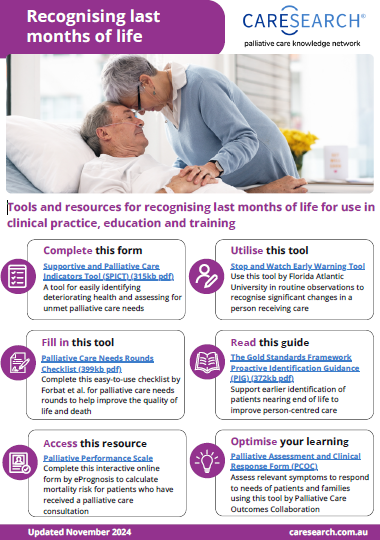
Resources for recognising last months of life
Last updated 28 September 2026