

18/03/2026 | Reading Time: 4 mins | Categories: Blog / Community / Diverse Communities / Dying2Learn / Health Professionals / HP Education / Implementation and Translation
If you’ve ever sat in a circle at a Death Café, joined a Dying to Know Day event, wandered through a Death Expo, settled your body into a somatic workshop at the Sydney Festival of Death and Dying, or sat with strangers that become friends at the Pure Land Death Festival, you’ll know this truth: community solutions to end-of-life care don’t begin in hospitals, they begin with people.
They begin with us.
Many have been conditioned to believe that death is a clinical issue to be managed by professionals. Yet, as the Lancet Commission on the Value of Death reminds us, death has become “unbalanced”, families and communities have been pushed to the margins, losing confidence in their own role in caring for each other at the end of life.
And still, everywhere across the country, grassroots communities have been quietly reclaiming that role.
When community steps in
If you ask people where they learned the most about death, dying, and what really matters at the end of life, often, they say: “Sitting around a table… with my friends… with food… with honesty.”
This simple, human act, gathering with people we trust, is at the heart of Conversations That Count, a project that Dr Linda Kurti and I dreamt up after meandering through a park in the inner west of Sydney back in 2021. The project brought groups of friends and friends-of-friends together in living rooms, around kitchen tables, in cafes and parks, to talk openly about death and dying. Food was always present. Safety was intentionally created. And what emerged was powerful: people realised that death is not just a medical moment. It is a profoundly social process, shaped by love, relationships, grief, hopes, fears, and the stories we carry.
And this, connection, might just be the most important community solution we have.
Grassroots movements are changing how we die
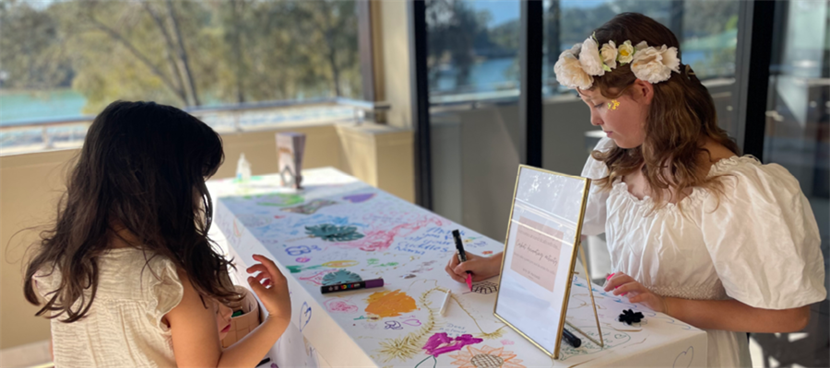
Across Australia, local communities are reclaiming death from the edges of medical systems and placing it back into everyday life:
- Dying to Know Day events that spark conversations in libraries, workplaces, and lounge rooms
- Death Cafés where strangers become confidants over tea and cake
- The increasing number of Death Expos across the country, connecting people with doulas, artists, celebrants, and supportive services
- The national local movements reclaiming death care and home funerals led by the Australian Home Funeral Alliance
- Sydney Festival of Death and Dying where somatic practices help people settle into their bodies and honour grief collectively
- Pure Land Death Festival, supported by the Good Death Impact Network and their national collaborative of change makers along with many other projects that are community led
- Zenith Virago’s Day of the Dead Ceremony, an annual community ritual in Byron Bay honouring loved ones through remembrance, procession, creativity, and collective grief tending
- Picnic Among Friends, founded by Victoria Spence and now occurring on the Sunshine Coast QLD: a tender, community-held memorial gathering where people come together on the grass to share food, stories, and quiet remembrance.
- And the many other initiatives that quietly continue to go on often unseen.
These gatherings normalise death in gentle, creative, culturally grounded ways. But they also do something deeper: they help people feel less alone, less unsure, and less afraid.
As Conversations That Count showed, when people talk about death early, before a diagnosis, before a crisis, they prepare better, plan better, and support each other better. Talking helps life become richer now, not just death later.
Why this matters now
End-of-life care is where systems can either retraumatise or restore. The Australian Institute of Health and Welfare estimates:
75% of adults have had at least one traumatic event, that’s roughly 3 out of 4 people.
42% of adults experienced childhood trauma, that’s nearly half of all adults carrying early trauma into later life.
Because a ‘traumatic event’ covers a huge variety of experiences: accidents, violence, loss, conflict, disaster, abuse, neglect, colonisation and displacement: the actual number of people impacted at some point is likely higher than we can confidently measure. Community provides safer spaces and places for support and connection. Especially, when formal systems may not be trusted or unable to respond in trauma informed ways and relational ways. Mistrust is not resistance; it’s memory.
Community spaces help restore what has been lost: dignity, belonging, cultural ritual, and the simple truth that no one should die, or grieve alone.
Working together: Community-led, system-supported care
What becomes clear, looking across all these community movements, from Conversations That Count to Death Cafés, Death Expos, Death and Dying Festivals, grassroots ceremonies and somatic practices, is that communities already hold the wisdom, capability, and cultural strength needed to support one another at the end of life. These are not deficits to be fixed; they are strengths to be recognised, resourced, and uplifted.
Formal health services have a powerful role to play here, not by leading, but by walking alongside. When health systems listen deeply, honour cultural knowledge, and make space for community-led practices, something shifts. Care becomes more relational. Planning becomes more meaningful. People feel seen, held, and supported in ways no clinical model can create on its own.
A strengths-based approach recognises that communities already know how to care for their own. They bring cultural traditions, storytelling, ritual, creativity, connection, and an understanding of what safety feels like. Services can amplify this by providing what communities ask for: trauma-aware clinicians, flexible models of care, practical resources, culturally safe spaces, and support that strengthens, not replaces community networks.
Useful links
CareSearch is a comprehensive online resource providing clear, evidence-based information to help patients, families, and communities understand palliative care, decision-making, and support options. The Community Education page lists workshops, public presentations or activities provided for the general public around advance care planning, death, dying or palliative care.
Compassionate Communities Australia | Home: A national hub supporting communities to build locally led networks of care that strengthen connection, compassion, and end-of-life support
Violet: A free service offering guidance, resources, and trained support workers to help people navigate the emotional and practical challenges of caring for someone at the end of life
Helping & Caring Made Simple | Gather My Crew: A digital platform that makes it easy to coordinate practical help, like meals, transport, or visits, by bringing together friends, family, and community supporters
HELP App | Healthy End of Life Program: A community-led toolkit and app designed to strengthen local networks of support by helping people identify needs, map connections, and organise care around dying, death, and bereavement
Author

Harpreet Kalsi-Smith
Founder
Tags: Compassionate Communities / Death and Dying / Death Literacy / End of life care / Grassroot Movements / Local Communities / Palliative Care
316 views
The views and opinions expressed in Palliative Perspectives are those of the authors and are not necessarily supported by CareSearch, Flinders University and/or the Australian Government Department of Health, Disability and Ageing.