


24/02/2026 | Reading Time: 4 mins | Categories: Blog / Community / Diverse Communities / Health Professionals / HP Education / Implementation and Translation
People with advanced cancer from culturally and linguistically diverse (CALD) backgrounds often miss out on important conversations about their future healthcare wishes, especially towards the end of life. The iCanPlan Program from the Australian Institute of Health Innovation (AIHI) at Macquarie University, offers a practical way for cancer services in Australia to improve these challenging conversations. It helps clinicians and interpreters to work together to support advance care planning (ACP), so patients can share their wishes and receive care that truly reflects what matters to them.
ACP helps people to think and make decisions about their values, preferences and wishes in relation to future health care and who they would choose as a substitute decision-maker if they could not make or communicate decisions for themselves. For people with life-limiting conditions, such as cancer, ACP gives peace of mind to patients and their families. [1] ACP can prevent unwanted treatments and transfers to hospital. [2, 3] Health care aligned to the person’s values leads to more personalised, high-quality care at the end-of-life. However, research shows that people from CALD backgrounds are less likely to engage in these discussions compared to the general population. [4] As a result, many may receive care they might have wished to avoid, and families are unprepared when the patient is unable to make or communicate decisions.
Effective communication between clinicians, patients and their family is an essential component of ACP, however, these conversations can be challenging. For those from CALD backgrounds, an interpreter may also be needed—adding another layer of complexity.
For people from CALD backgrounds, preferences for care at the end of life may also be influenced by cultural, religious and spiritual factors. It is vital that these factors along with language barriers are considered and addressed in ACP communication. [5]
As part of a three-year research program, funded by Cancer Institute NSW, [5] we aimed to improve the uptake of ACP communication among people from CALD backgrounds who require language support. Through a range of studies [6, 7] conducted as part of this project we found that:
- Collaboration between clinicians and interpreters is key to supporting the ACP communication with CALD communities, but there is a lack of specialised training for interpreters about ACP in Australia.
- Clinicians report low confidence in engaging in ACP communication with people from CALD backgrounds, especially when they face language barriers.
- Systemic barriers and communication gaps contribute to lower ACP uptake among people with cancer from CALD backgrounds.
Informed by these findings, we conducted three co-design workshops to create a resource to improve how interpreters and clinicians can work together to conduct effective ACP communication with people from CALD backgrounds who require language support. [8] Co-design means working together with relevant group of people to design a resource that meets the needs of the people who are going to use it or are affected by it.
The iCanPlan Program (figure 1) was co-designed with NSW Health Care Interpreter Services, Advance Care Planning Australia, clinicians and consumers from CALD backgrounds to provide free education for interpreters and clinicians in conducting ACP for people affected by cancer from CALD backgrounds. The education is supported by facilitated feedback to support behavioural change towards improved collaboration between clinicians and interpreters in ACP. [8]
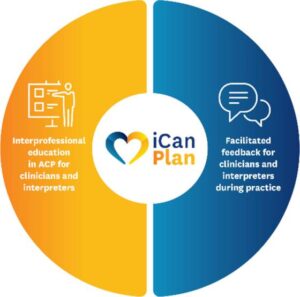
Figure 1: Pictorial representation of the iCanPlan Program
As a whole, the iCanPlan Program is a practical approach developed for use by cancer services nationally to improve how clinicians and interpreters can work together in ACP. The program addresses an important gap in care provision that contributes to inequities for people from CALD backgrounds. Currently, we are conducting a study to test the feasibility and acceptability of the program in Victorian cancer services. Recommendations for wider implementation nationally are planned. Please reach out to lead author, Dr Ashfaq Chauhan if you would like to know more about the program or if you are interested in implementing it in your health service.
This research was funded by Cancer Institute NSW through Professor Reema Harrison’s Career Development Fellowship.
Useful resources
- You can read more about the iCanPlan Program and its development through this link – Codesigning the iCanPlan Program to promote advance care planning among consumers from ethnic minority backgrounds in cancer care | Supportive Care in Cancer
- The education component of the iCanPlan Program is freely available online through AIHI YouTube channel: https://youtu.be/6tvPVqzN75M?si=UTtWqfZEh8RWplkG
- Interpreters in NSW can also access this education through NSW Healthcare Interpreter Services Professional Development SharePoint site and can claim 10 points towards their continuous professional development – https://url.au.m.mimecastprotect.com/s/i9_ECgZ05JfAVqX52iNf8i46Tg1?domain=nswhealth.sharepoint.com
- For more information about advance care planning, please visit – Advance Care Planning Australia
References:
- Detering KM, Hancock AD, Reade MC, Silvester W.The impact of advance care planning on end of life care in elderly patients: Randomised controlled trial. BMJ. 2010;340:c1345.
- Bischoff KE, Sudore R, Miao Y, Boscardin WJ, Smith AK.Advance care planning and the quality of end-of-life care in older adults. J Am Geriatr Soc. 2013;61(2):209-214.
- Brinkman-Stoppelenburg A, Rietjens JA, van der Heide A.The effects of advance care planning on end-of-life care: A systematic review. Palliat Med. 2014;28(8):1000-1025.
- Sinclair C, Sellars M, Buck K, Detering KM, White BP, Nolte L.Association between region of birth and advance care planning documentation among older Australian migrant communities: A multicenter audit study. J Gerontol B Psychol Sci Soc Sci. 2021;76(1):109-120.
- Chauhan A, Chitkara U, Walsan R, Sansom-Daly UM, Manias E, Seah D, et al.Co-designing strategies to improve advance care planning among people from culturally and linguistically diverse backgrounds with cancer: iCanCarePlan study protocol. BMC Palliat Care. 2024;23(1):123.
- Chitkara U, Chauhan A, Walsan R, Li M, Pervaz Iqbal M, El-Kabbout N, et al.Advance care planning in multicultural communities: A document analysis of resources to support healthcare staff and consumers in Australia. Health Expect. 2025;28(5):e70460.
- Chauhan A, Sansom-Daly UM, Manias E, Van Poucke M, Sarwar M, Tieu NT, et al.Implementing advance care planning with people from ethnic minority backgrounds with cancer: A qualitative study of factors affecting practice in Australia. Support Care Cancer. 2025;33(7):648.
- Chauhan A, Greenberg S, Jessop S, Huang N, Fifield-Smith H, El-Kabbout N, et al.Codesigning the iCanPlan Program to promote advance care planning among consumers from ethnic minority backgrounds in cancer care. Support Care Cancer. 2025;33(12):1111.
Authors

Dr Ashfaq Chauhan
Research Fellow, Centre for Health Systems and Safety Research
Australian Institute of Health Innovation, Macquarie University

Anna Kenny
Professional Development Coordinator
Western Sydney Local Health District Health Care Interpreter Service, NSW Health

Kylie Ash
Education Coordinator
Advance Care Planning Australia

Dr Mila Obucina
Policy and Research Officer
Advance Care Planning Australia

Professor Reema Harrison
Healthcare Engagement and Equity Research Stream Lead, Centre for Health Systems and Safety Research
Australian Institute of Health Innovation, Macquarie University
Tags: Advance Care Planning / CALD / Cancer Care / Clinical-Interpreter Collaboration / Culturally and Linguistically Diverse Communities / End of life care / iCanPlan Program / Migrant Communities
525 views
The views and opinions expressed in Palliative Perspectives are those of the authors and are not necessarily supported by CareSearch, Flinders University and/or the Australian Government Department of Health, Disability and Ageing.