

Key messages
- Recognising when a patient is dying is important for providing high-quality end-of-life care, particularly in acute settings where timely palliative interventions can significantly enhance patient comfort and satisfaction.
- Terminal care is the comprehensive management of the last short weeks to days of an incurable disease with a focus on alleviating suffering and maintaining quality of life rather than curing the illness. It adopts a multidisciplinary approach involving comprehensive assessment to address physical, emotional, social and spiritual needs, aiming for a dignified end-of-life experience for patients, their families/caregivers, in line with individualised goals of care.
- Acute hospitals, though common places for death, often lack the optimal environment for palliative care due to their focus on curative interventions and clinicians’ lack of knowledge, skill and confidence in providing end-of-life care. Palliative care units, residential aged care, and home-based care settings are preferred for end-of-life care as they usually provide more personalised and comfortable environments.
- Common terminal care symptoms include pain, dyspnoea, terminal restlessness, delirium and respiratory secretions. Management of symptoms are offered in response to an individual’s needs and goals of care. Interventions to address these specific symptoms done through considered pharmacological and non-pharmacological interventions.
- Families and carers of dying patients experience significant emotional and physical demands; effective symptom management, clear education and communication and robust support systems are essential to alleviate their burden and improve the end-of-life experience for both patients and caregivers.
Definition and prevalence
Recognising when a patient is dying is important for providing high-quality end-of-life care, particularly in acute settings where timely palliative interventions can significantly enhance patient comfort and satisfaction. [1,2] This is especially challenging given our ageing population, which often presents with complex multiple co-morbidities that lead to non-malignant causes of death, making the prediction of the dying phase more difficult due to their unpredictable trajectories. [3] Effective recognition allows healthcare providers to initiate appropriate palliative care measures, which are essential for improving the quality of life in the final days. [2] However, the variability and complexity of non-malignant diseases often result in delayed or missed opportunities for providing such care, underlining the need for improved prognostic tools and training. [3]
Terminal care is the comprehensive management of patients in the last short weeks to days of life, focusing on alleviating suffering, providing comfort and maintaining the quality of life rather than attempting to cure the illness. [4] It involves a multidisciplinary approach that addresses physical, emotional, social and spiritual needs, aiming to provide a dignified end of life experience for patients and their family carers. [5]
Acute hospitals are common places for death, though they are often ill-suited to provide optimal palliative care due to their focus on curative interventions and lack of confidence in providing end-of-life care. [6] Hospices, residential aged care and home-based care settings are increasingly preferred, as they offer more personalised and comfortable environments for end-of-life care. [7] The availability and quality of palliative care services can vary widely, particularly in rural areas where access to specialised care is limited. [8] This highlights the need for improved palliative care infrastructure and training across all settings to ensure that terminal care is consistently delivered with compassion and competence. [4,7] In Australia, there are insufficient services to support dying at home due to limitations in federally funded supports, like Home Care Packages, to provide rapid response to the changing needs of a patient in the terminal phase. As a result, practical care is often delivered by informal supports.
Assessment
Assessing the needs of dying patients involves a comprehensive approach that includes physical, psychological, social, cultural and spiritual dimensions. [9,10] In the terminal phase, the emphasis on assessment shifts from ongoing disease management to ensuring comfort and addressing distressing symptoms promptly. This holistic approach is essential to provide quality end-of-life care that aligns with the patient’s wishes and enhances their remaining quality of life. [9,11] Patients in the terminal phase often experience a range of distressing symptoms that require careful assessment, including:
- Pain: A prevalent symptom in terminal patients, requiring regular assessment using tools like the Numerical Rating Scale (NRS) or the Visual Analogue Scale (VAS) to ensure appropriate pain management strategies are implemented. [9,12]
- Dyspnoea: Difficulty breathing is common and can be assessed using the Modified Borg Scale. [13]
- Delirium: Requires prompt management to improve patient comfort and reduce distress using tools like the Confusion Assessment Method (CAM). [11,13]
- Oral health: Assessment involves checking for dryness, sores, infection and overall hygiene. [10,14]
- Terminal restlessness: The Richmond Agitation-Sedation Scale (RASS) helps measure the level of agitation and sedation in patients.
- Respiratory secretions: Utilising standardised assessment scales, such as the Respiratory Distress Observation Scale (RDOS), helps quantify the impact of these secretions. [15]
- Pressure injuries: Regular skin assessments and using validated tools such as the Braden Scale are important for early detection and prevention of pressure injuries. [16]
Treatment
Treatment options in palliative care must be tailored to the individual needs of patients to ensure care decisions align with the stated values and preferences of the person, particularly those who are imminently dying. The primary goal is to provide relief from distressing symptoms and to ensure the patient’s comfort and dignity. [9] Key symptom management is described briefly below, and covered in more detail in individual topics.
Pain relief: Opioids are commonly used to manage severe pain in terminally ill patients. [11] The dosage and administration route should be adjusted based on the patient’s level of consciousness, ability to swallow and presence of nausea and/or vomiting. [10,17] The preferred route for the dying patient is subcutaneous. Morphine is considered initially unless the patient has significant renal impairment or an allergy. Then hydromorphone or fentanyl are suggested.
Dyspnoea management: Opioids are effective for reducing the sensation of breathlessness. [5] Benzodiazepines may be used to alleviate anxiety associated with dyspnoea. [10] Non-pharmacological interventions, such as repositioning the patient if they are conscious, and using fans can also provide relief. [9]
Management of respiratory secretions: Anticholinergics such as scopolamine, atropine or glycopyrrolate are used to reduce respiratory secretions. [17] Changing the patient’s position can help drain secretions naturally, which allied health staff can assist with. [15] Gentle oral suctioning can be used to manage respiratory secretions if there are copious amounts of secretions present, or secretions pooling into the mouth. [15] Providing clear explanations to the patient’s relatives about the symptom and its progression can also help reduce their distress. [15]
Delirium and agitation: Ruling out other causes for distress, such as urinary retention, should be made before commencing treatment. Antipsychotics like haloperidol and olanzapine are commonly used to manage delirium. Benzodiazepines may be added if agitation is severe. [5,13] Non-pharmacological strategies such as maintaining a calm environment, providing reassurance, using familiar sounds and scents to assist in orientation and employing reorientation boards are also important. [5,11]
Nausea and vomiting: Antiemetics such as ondansetron, metoclopramide and haloperidol are used to control nausea and vomiting. [11] The choice of antiemetic depends on the underlying cause of nausea. [10]
Fatigue: Non-pharmacological strategies include compensatory equipment and task modification to minimise the impact of fatigue and to conserve energy for quality-of-life activities.
Psychological support: Addressing anxiety and depression in the dying phases involves non-pharmacological interventions, including counselling, cognitive-behavioural therapy and mindfulness techniques. [11,18]
Skin Care: Preventing and treating pressure injuries is important in terminal care. [4] This involves regular repositioning, ongoing review of continence management to minimise risk of skin breakdown with bed centred cares, use of supportive surfaces and maintaining good skin hygiene. [4,19]
Mouth care: Simple measures such as regular mouth care with swabs and the use of moisturising agents to lips can significantly improve comfort. [10,14]
Mechanical ventilation: The decision to withhold or withdraw life-sustaining treatments, such as mechanical ventilation, requires a structured and ethical approach to navigate complex decisions. [11] Clear guidelines and support systems are necessary to assist healthcare providers in making these decisions. [20]
Palliative sedation: The primary goal is to alleviate intractable symptoms such as severe pain, agitation, or existential distress that cannot be controlled by other means. [21,22] Commonly used sedatives include midazolam, propofol or barbiturates, tailored to the patient’s needs and response. [22] The dosage and administration route are adjusted based on continuous monitoring of the patient’s symptoms and comfort levels. [22]
Equity and access
Underserved populations may receive inequitable end-of-life care due to systemic barriers and healthcare disparities. When minority identities intersect, the barriers to receiving affirming and culturally safe care are even more pronounced. [23] This intersectionality exacerbates the challenges, which can lead to poorer health outcomes and increased suffering at the end of life. [23]
CALD populations, Aboriginal and Torres Strait Islander peoples and people who are experiencing homelessness frequently receive less palliative care and more aggressive treatments due to cultural differences, mistrust of the healthcare system and lower rates of advance care planning. [24-26] These disparities are compounded by systemic racism and discrimination, which manifest in biased clinical interactions and reduced access to specialised palliative care services. [24] To address these issues, healthcare providers must develop culturally sensitive care practices and foster trust through community engagement and education. [27,28]
Geographic isolation and lack of specialised providers significantly impact rural populations’ access to quality end-of-life care. Telemedicine has emerged as a potential solution to bridge this gap, but logistical challenges such as poor internet connectivity and limited local resources persist. [8,29] Additionally, LGBTQI+ individuals often face discrimination and a lack of culturally competent care, which impacts their comfort and trust in healthcare settings. [28] Ensuring inclusive care practices, adopting affirming language and recognising chosen families in care plans are important for improving end-of-life experiences for LGBTQI+ patients. [28] Prisoners represent another underserved group, often receiving inadequate palliative care due to restrictive and resource-limited environments. Policy changes, such as implementing compassionate release programs and establishing hospice facilities within prisons, are necessary to provide appropriate care for terminally ill prisoners. [30]
Addressing economic and logistical barriers is essential for equitable palliative care provision. Socioeconomic challenges, combined with logistical issues like limited transportation, hinder timely access to palliative care, particularly in marginalised urban and rural communities. [24,29] Low health literacy acts as another barrier to accessing palliative care, and requires tailored educational interventions to ensure patients and families can make informed decisions at end of life. [24,25]
Care context
All healthcare professionals should be able to give culturally safe, affirming and high-quality end-of-life care regardless of the location. However, care settings for dying patients vary significantly, influencing the approach and quality of care provided. In acute hospital settings, the recognition of dying often relies on collaborative efforts among healthcare professionals. Nurses typically identify signs of imminent death first but require confirmation from doctors, which can delay the transition to palliative measures and contribute to the continuation of curative treatments until death is confirmed. [5,6] Acute hospitals may lack structured assessment tools to address comprehensive needs, including emotional and spiritual aspects, which can compromise the quality of end-of-life care provided. [9,11]
Residential aged care homes offer a more familiar and comfortable environment for dying patients, particularly those with dementia or chronic conditions. These settings should be focused on maintaining quality of life and avoiding unnecessary hospitalisations, which are often considered inappropriate for expected deaths. [6,10] However, care homes face challenges such as cultural resistance to acknowledging death and the need for palliative care and a lack of adequate training, which can delay the implementation of end-of-life measures. [9,10] For residents living with dementia, agitation, pain and infections are prevalent in the terminal stages and require tailored management strategies. [6,11]
Home-based palliative care programs allow patients to die in familiar surroundings and have shown promise in improving patient satisfaction and reducing hospital admissions. [29,31] However, these programs require robust support systems and coordination with primary care providers, in addition to support for family members and carers to be effective. [8,31] For patients with neuromuscular diseases, end-of-life care involves early palliative care interventions and clear communication to address the unique needs and fears associated with these conditions. [11,32]
Implications for families and carers
Caring for a dying person places significant emotional and physical demands on families and carers. The process involves managing complex symptoms, providing comfort and ensuring dignity in the patient’s final days. [7] Carers often experience high levels of stress and anxiety due to the continuous and intense nature of care, which can lead to caregiver burnout if not adequately supported. [5] Effective symptom management is critical in reducing the burden on caregivers and improving the quality of life for both patients and their families. [11]
Clear and compassionate communication between healthcare providers and families is essential to ensure that care aligns with the patient’s wishes and to help families understand what to expect during the dying process. [18] Advance care planning is a key component, enabling families to make informed decisions and reducing uncertainty and distress. [24] Education and training for caregivers on symptom management and end-of-life care practices can empower them to provide better care and cope with the challenges they face. [6]
Formalised care supports and access to specialist palliative care teams are important in alleviating the physical and emotional burdens, and facilitating improved bereavement outcomes for families and carers. [7] Multidisciplinary teams can provide comprehensive support, addressing various aspects of care, from medical needs to psychosocial support. [5] These teams can offer resources and guidance to caregivers, ensuring they have the necessary support to manage the complex demands of caring for a dying person, ultimately improving the overall end-of-life experience for both patients and their families. [7,11]
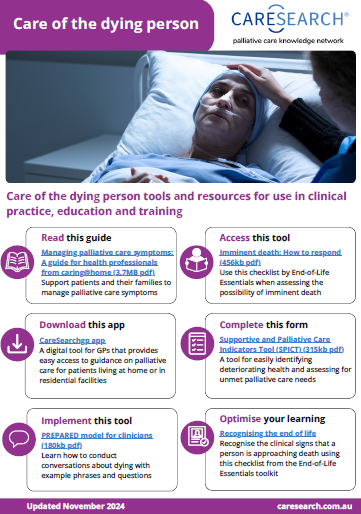
Resources for caring for the dying person
Last updated 02 September 2026