

30/09/2026 | Reading Time: 3 mins | Categories: Blog
The birth of a baby is usually a time of joy. A new life to be celebrated. Unfortunately, due to a range of circumstances, some babies do not survive beyond the newborn stage. Such loss is profoundly painful, leaving families to grieve both their baby and the future they had anticipated.
End-of-life care provided to babies in a Neonatal Intensive Care Unit (NICU) often occurs in a clinical environment; however, families can also be offered transfer to a hospital closer to home, a private residence or a children’s hospice. The traditional method of transfer involves the baby being harnessed in a warm transport cot with clinical equipment attached such as a mechanical ventilator, oxygen cylinders, intravenous pumps, cardiorespiratory monitor and suction device. A specialised neonatal retrieval team escorts the baby and if adequate seating is available in the transport vehicle, a parent will accompany.
Putting the patient journey first – impetus to change
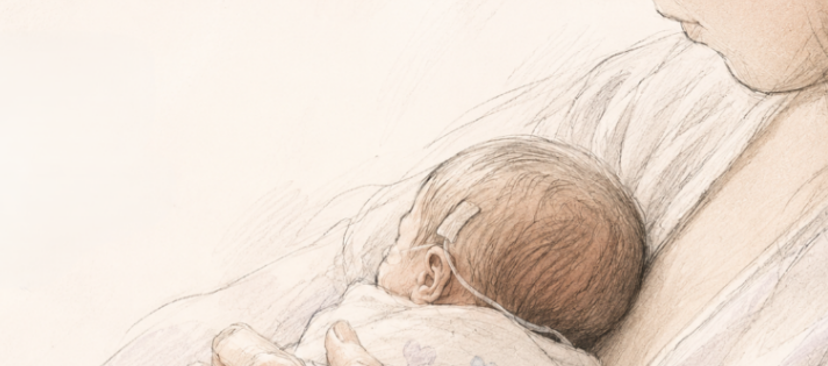
In 2021, the NeoRESQ team were introduced to a family who had requested their baby be transferred to a children’s hospice to receive end-of-life care. The sheer devastation on the grieving mother’s face as she tightly embraced her beautiful baby was absolutely heartbreaking. Although she wished for her baby to be transferred, she could not bear the thought of her newborn baby leaving her arms to be placed in the transport cot. Witnessing this devastation instigated the impetus to change. The goal was to determine whether there was a safe way to transfer babies for end-of-life care without having to separate parent and child. Would it be possible to safely perform a ‘cuddle transfer’ on a patient stretcher which would involve a parent holding their baby on their chest in a baby wrap?
Establishing a novel model of transport
The first step was to determine feasibility including consideration of logistics, clinical equipment, and appropriate personnel to ensure safe transportation. This involved clinical teams, allied health teams and transport partners. Photography, videography and simulations including mock transfers were used to work out a way for a baby requiring mechanical ventilation to be safely transferred in this way. The parent’s and baby’s safety and comfort were the top priority. It was also essential that the baby could be clearly seen during transfer and reached quickly if needed.
Prior to implementation, work instructions were developed, equipment checklists created, and the clinical team received education. Over time the process has been continually refined including the inclusion of a ‘stretcher bridge’ to secure the equipment. (see photo)
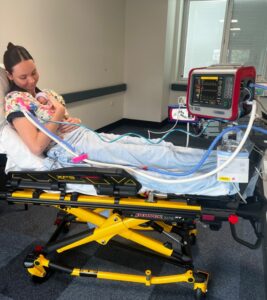
(Simulation/mock cuddle transfer–intubated and ventilated baby,
with equipment securely attached to a stretcher bridge)
A service and process review concluded that neonatal cuddle for end-of-life transfer is a safe and meaningful addition to our neonatal retrieval service when appropriately supported by skilled multidisciplinary teams, including babies that require intensive care support. [1]
Enhancing care through connection and choice
Cuddle transfer feedback provided by clinical care teams, retrieval team members and transport partners has been overwhelmingly positive. Family feedback has not been requested due to the sensitive nature of these transfers; however, the team are in collaboration with a consumer with lived experience to develop a survey to gain family perspectives. By offering parents the choice to cuddle their baby during an end-of-life transfer, they are given the opportunity to spend crucial time together while creating precious moments and lasting memories.
Often in healthcare, longstanding practices are maintained simply because they have always been the standard approach. However, by looking beyond conventional boundaries, opportunities for improvement can be identified, helping to advance the quality of care we deliver.
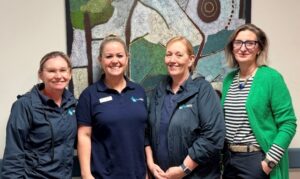
(From left to right: Melissa Melville, Jacqueline Plazina, Li-An Collie, Lucy Cooke)
Reference
1. Plazina J, Melville M, Collie LA, Cooke L, August D. Kangaroo cuddle transport for neonatal palliative care: A service evaluation. Nurs Crit Care. 2025;30(5):e70143.
Finding support after the death of a child can be difficult. CareSearch offers curated information to support families through this time, including printed resources and links to services and supports and education.
Tags: End Of Life / Evidence Based Practice / Paediatric Palliative Care / Palliative Care Nurses / Palliative Care Support
540 views
The views and opinions expressed in Palliative Perspectives are those of the authors and are not necessarily supported by CareSearch, Flinders University and/or the Australian Government Department of Health, Disability and Ageing.